Research Article | | Peer-Reviewed

The Future of Conventional Complete Dentures: A Narrative Review on Edentulism Risk Factors

Received: 19 March 2025     Accepted: 8 April 2025     Published: 29 April 2025
Views:       Downloads:
Abstract

Objective: This narrative review examines the factors contributing to edentulism, presents relevant data, and explores whether conventional complete dentures will remain necessary in the future. Background: Although tooth loss has shifted from being an inevitable outcome due to limited treatment options to a largely preventable condition, a significant number of individuals remain edentulous. This persistence is influenced by factors such as limited access to oral healthcare, socio-economic status, epidemiological transitions, and the attitudes of both populations and healthcare providers. Despite advances, edentulism, often caused by dental caries, periodontal disease, or trauma, continues to affect a large portion of the global population and is unlikely to diminish in the near future. The literature identifies several factors that contribute to the onset of edentulism. Methods: A thorough literature search was conducted across electronic databases including PubMed, Google Scholar, Scopus, and the University of Sydney Library’s scientific articles database. Results: Initially, 378 articles were identified. After screening abstracts and assessing relevance, 83 articles were shortlisted. Of these, 24 met the inclusion criteria, focusing on risk factors associated with edentulism and were selected for review. Conclusion: The need for conventional dentures will likely depend on the stage of epidemiological transition in each country. Traditional dentures may remain a key solution for edentulism in nations with higher rates of tooth loss.

Published in International Journal of Dental Medicine (Volume 11, Issue 1)
DOI 10.11648/j.ijdm.20251101.14
Page(s) 25-33
Creative Commons

This is an Open Access article, distributed under the terms of the Creative Commons Attribution 4.0 International License (http://creativecommons.org/licenses/by/4.0/), which permits unrestricted use, distribution and reproduction in any medium or format, provided the original work is properly cited.

Copyright

Copyright © The Author(s), 2025. Published by Science Publishing Group

Keywords

Edentulism, Oral Epidemiology, Epidemiologic Transition, Teeth Loss, Global Health

1. Introduction
The history of humanity has been narrated through teeth. Archaeological findings have unveiled stories embedded in ancient teeth and mandibles, allowing scientists to piece together aspects of our ancestors' lives. But how could ancient human remains retain teeth in the jawbone when tooth loss is so prevalent in modern history?
This question can be answered by examining humanity's own interventions in its evolution. Early dental treatments, dietary changes, and shifting beliefs about oral health may hold the key to understanding this phenomenon.
To discuss edentulism, it’s essential to understand the origins of dental disease and treatment, or at least to have an idea of how these developments emerged. Although evidence of dental treatment dates back approximately seven thousand years, modern dentistry truly began in the 14th century, when monks practiced medicine. Their assistants, initially barbers responsible for hairstyles, observed these practices and began replicating them, thus initiating the barber’s role in dentistry, a role that persisted for centuries.
When Pierre Fauchard published The Surgeon Dentist in 1723, he left an indelible mark on the perception of oral health. This perception was further influenced by the rise of a modern soft diet, overuse of sugar, and food processing, leading early industrialized countries to experience an epidemic of edentulism.
In the mid-1920s, tooth extraction was the primary solution for dental issues, including teeth alignment, a practice that continued robustly until the 1960s. Fortunately, two pivotal advancements arrived with the baby boom generation: the incorporation of fluoride into drinking water and the popularization of Borden’s air-rotor. These innovations transformed beliefs about oral health and significantly improved the likelihood of individuals retaining their teeth into old age.
Since the 1960s, the prevalence of edentulism has declined, yet we are still far from achieving universal lifelong dentition.
This review aims to explore the epidemiology of edentulism and its contributing factors, and to address the question: Will there still be a need for conventional complete dentures in the future?
2. Definitions
Edentulism, or total tooth loss, is defined by The Glossary of Prosthodontic Terms (GPT-9) as the condition of being edentulous or without teeth. However, McGarry et al. expanded on this definition in 1999, describing edentulism as the physical state of the jaw(s) following the removal of all erupted teeth, along with the condition of the supporting structures available for reconstructive or replacement therapy.
Oral epidemiology is the study of the distribution and determinants of oral health-related conditions or events within specific populations, intending to apply this knowledge to control health problems.
Epidemiologic transition refers to the shift in a population’s mortality and disease patterns from high mortality rates among infants and children, with episodic famine and epidemics affecting all ages, to a predominance of degenerative and human-made diseases.
Risk factors are attributes, characteristics, or exposures that increase an individual’s likelihood of developing a disease or health disorder.
Prevalence is defined as the number of individuals in a population affected by a specific event at a given time, divided by the total population.
3. Materials and Methods
A comprehensive literature search was conducted to identify relevant articles. The keywords used in the search included “total tooth loss,” “edentulism,” “prevalence of tooth loss,” “epidemiology of edentulism,” “prevalence of edentulism,” “edentulousness,” and “history of edentulism.”
The literature search was conducted across multiple electronic databases, including PubMed, Google Scholar, Scopus, and the University of Sydney Library’s scientific articles database. A total of 378 articles were initially identified. Following an abstract screening and relevance assessment, 83 articles were shortlisted. Of these, 24 articles met the inclusion criteria and were selected for review based on their detailed descriptions of variables associated with edentulism.
This article is a review of existing literature and does not involve human subjects or the collection of new data. As such, it does not require ethical approval in accordance with the Declaration of Helsinki (1964) and its later amendments. All studies referenced in this review have been conducted in compliance with ethical standards, as reported by the original authors.
3.1. Prevalence of Edentulism
Contrary to what we might assume, prehistoric humans rarely experienced edentulism as we do today. Their diet, rich in fibre and coarse foods, promoted natural self-cleaning and contributed to developing strong bones and muscles. The epidemiologic transition has also played a role in the shift from fully dentate to edentulous states. As people live longer, the likelihood of tooth loss increases. By the late 18th century, the Industrial Revolution marked a shift to new manufacturing processes, moving away from traditional methods. This transition also impacted food preparation and consumption, initiating a "nutrition transition" from conventional diets to those based on refined sugars and processed foods. This turning point introduced new dental health challenges, with edentulism becoming especially prominent. During the 19th and 20th centuries, it was widely accepted that tooth loss in later life was inevitable.
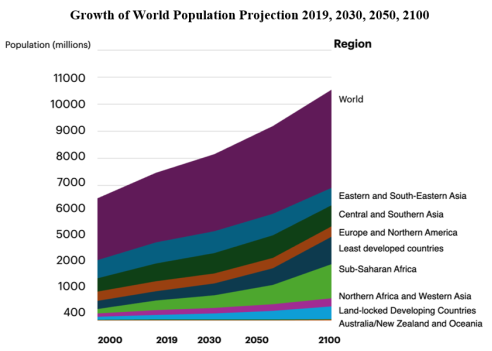
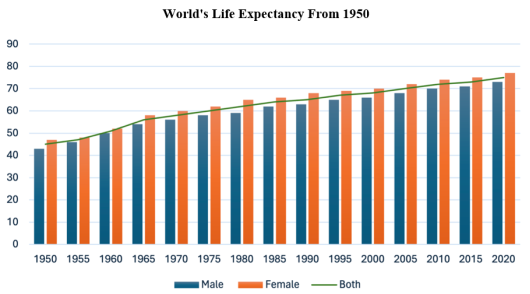
The prevalence of edentulism continued to rise through the mid-20th century, affecting more than half of the population in some regions, particularly in industrialised countries. In contrast, traditional aboriginal tribes worldwide retained their teeth longer than urban residents in the 1940s and 1950s. Oral epidemiological surveillance initiated in the 1960s and 1970s revealed a steady decline in edentulism prevalence. Although comprehensive data are unavailable from every country, global edentulism prevalence is estimated to be around 4.5% to 6%, a significant reduction from the estimated 50%-60% five decades ago. In 2002, Douglas et al. noted an approximate 10% decrease in prevalence per decade. However, due to population growth and increasing life expectancy, the number of edentulous individuals will likely continue to rise. Figures 1, 2.
Data source: United Nations, Department of Economic and Social Affairs, Population Division (2019).

Download: Download full-size image

Figure 1. World Population Prospects 2019.
Data source: United Nations, Department of Economic and Social Affairs, Population Division (2019).

Download: Download full-size image

Figure 2. World Population Prospects 2019.
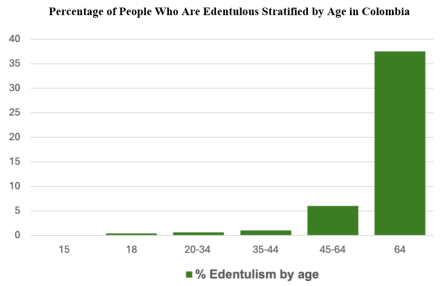
Due to the events leading to the epidemiologic transition, societies will face new challenges related to an aging population. While the prevalence of edentulism has decreased, it is more pronounced among individuals under 50, who are losing teeth at a slower rate than those over 60. As a result, most edentulous individuals will continue to be in the 65+ age group, representing a significant proportion of the population. In other words, the demand for complete dental rehabilitation is expected to remain constant in the foreseeable future. For instance, data from the 4th National Oral Health Survey in Colombia helps illustrate this trend. Figure 3
Figure 3. The prevalence of edentulism is more significant in groups over 65 years old worldwide. Data source: National oral health study ENSAB IV 2014, Ministerio de Salud Colombia.
3.2. Variables Affecting the Onset of Edentulism
The underlying causes of edentulism are multifactorial, meaning that it cannot be attributed to a single factor. Rather, the risk factors for edentulism—while common—must be understood in the context of specific regions, countries, and populations. These risk factors include a combination of socio-economic, cultural, behavioural, and health-related variables, all of which influence outcomes. However, it is important to note that not everyone who exhibits all these risk factors will inevitably experience edentulism. This variability highlights the complexity of dental health outcomes and the need for targeted, personalized interventions that consider individual and community-specific circumstances. Numerous studies have identified dental caries as the predominant cause of tooth loss, particularly among younger individuals. Caries-related tooth loss often stems from untreated decay, which progresses to a point where restoration is no longer viable. For individuals who retain their teeth into adulthood, periodontal disease emerges as the leading cause of tooth loss. This condition, characterized by the progressive loss of attachment, is strongly associated with inadequate oral hygiene, and often affects older populations. The shift in causative factors over a person’s lifespan highlights the importance of age-specific preventive measures, from early interventions to combat caries in youth to periodontal maintenance in adulthood.
Dental trauma, although the mouth constitutes merely 1% of the body’s total surface area, accounts for approximately 5% of all bodily injuries. These injuries are particularly prevalent in specific age groups and activities. Among young individuals, dental trauma is frequently linked to sports participation, where high-impact activities increase the risk of injury. In contrast, falls are the leading cause of such injuries among the elderly, often exacerbated by age-related factors such as reduced coordination and balance. This data underscores the need for preventive strategies, including protective gear for athletes and fall prevention programs for older adults, to mitigate the incidence of dental trauma.
Socioeconomic factors—including income, education, and access to social support—play a crucial role in determining the incidence of edentulism, particularly among older adults. Limited financial resources and lower educational attainment often result in reduced access to regular dental care. For instance, individuals with economic constraints or limited health literacy are more likely to seek dental care only when issues become severe, rather than prioritizing preventive measures. This reactive approach to oral health further exacerbates disparities in dental outcomes, highlighting the importance of targeted public health interventions and accessible dental services for vulnerable populations.
Cultural and socio-demographic factors—such as gender, age, occupation, migration background, religious affiliation, life expectancy, marital status, and ethnicity— play a significant role in shaping the prevalence and incidence of edentulism. These factors influence oral health beliefs, access to dental care, and practices, which vary widely across populations. For example, a comparative analysis reveals a striking disparity: while edentulism prevalence is as low as 4% in some sub-Saharan countries, much higher rates are documented in developed nations like Japan. These differences underscore the complex interplay between cultural norms, socio-economic conditions, healthcare systems, and public awareness about oral health.
Access to dental care is closely linked to edentulism across different populations. Total tooth loss often reflects a lifetime of dental disease, as well as the types and quality of treatments individuals have received. Historically, dental care was shaped by practices and beliefs that frequently led to the extraction of teeth as a primary solution for oral health issues. For many, a visit to the dentist was synonymous with tooth removal. In contrast, modern dentistry has shifted toward a preventive and restorative approach, focusing on preserving natural teeth through advanced techniques and treatments. This evolution highlights not only advancements in dental technology but also a growing emphasis on patient education and long-term oral health.
Research on edentulism can, therefore, indirectly provide insights into access to dental care. Furthermore, access to dental services can act both as a risk factor and a protective factor. For example, isolated Aboriginal Australian populations in the 1940s exhibited better-preserved dentition compared to those in urban areas, who were exposed to sugar and processed foods, a trend still evident in many underdeveloped and developing societies. However, by the 21st century, this relationship seems to have evolved. In some studies, access to dental care is a risk factor, while in others, it serves as a protective factor due to advances in prevention, promotion, and minimal intervention practices.
The disparity between private and public dental services significantly influences the prevalence of edentulism, particularly among low-income populations. Access to high-quality private dental care often correlates with better oral health outcomes, as individuals can afford preventive treatments and timely interventions. In contrast, those relying on public dental services may face longer waiting times, limited access to specialized care, and fewer resources for preventive measures. This inequity in dental care accessibility contributes to higher rates of edentulism in disadvantaged communities, underscoring the need for policies that ensure equitable access to comprehensive dental services for all populations.
In addition to socio-economic and cultural factors, lifestyle choices and health conditions also play a critical role in the onset of edentulism30. Smoking, alcohol consumption, and drug abuse are all strongly linked to tooth loss, as these behaviours contribute to oral health issues such as gum disease, dry mouth, and reduced healing capacity. Moreover, cognitive impairments and mental health disorders, including depression, Alzheimer’s disease, eating disorders, dental anxiety, and strokes that impact motor skills, can further exacerbate the risk of edentulism. These conditions may hinder individuals' ability to maintain proper oral hygiene, seek timely dental care, or adhere to treatment plans, thereby accelerating tooth loss. Addressing these underlying factors through comprehensive care and support can help mitigate the risk of edentulism in vulnerable populations.
Various diseases, treatments, and conditions are strongly associated with edentulism, further complicating the oral health landscape. Polypharmacy, or the use of multiple medications, is particularly prevalent among older adults and can contribute to dry mouth (xerostomia), which in turn increases the risk of tooth decay and gum disease. Chronic conditions like diabetes are also linked to a higher incidence of edentulism, as they can impair the body's ability to fight infections, including those affecting the gums and teeth. Additionally, cancer treatments such as radiotherapy, particularly when applied to the head and neck area, can lead to significant oral health complications, including reduced salivation and tissue damage, both of which accelerate tooth loss. Understanding the interactions between these health conditions and dental outcomes is crucial for providing effective preventive care and treatment strategies for individuals at risk of edentulism.
The epidemiology of edentulism is complex and cannot be fully understood without considering the wide range of variables that contribute to its prevalence. These factors include socio-economic status, lifestyle choices, access to dental care, underlying health conditions, and more. However, measuring all these variables within a single study presents significant challenges due to their multifaceted nature and the need for comprehensive data across diverse populations. Despite these challenges, it is essential to account for these factors in research to gain a more accurate understanding of the causes and distribution of edentulism. By addressing the interplay between these variables, we can better inform preventive measures and public health strategies aimed at reducing tooth loss.
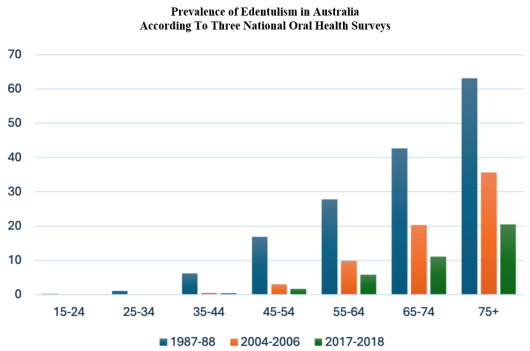
Australia provides a valuable case study for understanding the epidemiological changes in oral health, as it has experienced trends similar to those seen in other industrialized nations. Over the 30 years leading up to 2017, the prevalence of edentulism in Australia significantly decreased, a trend reflected in the findings of its three National Oral Health Surveys. This decline in tooth loss can be explored through generational patterns. According to the 2004–06 survey, treatment decisions were the primary cause of edentulism among Australians born before 1950, with many opting for extractions due to limited treatment options. In contrast, edentulism was almost non-existent among those born after 1970, highlighting improvements in preventive care and access to restorative treatments. The overall prevalence of edentulism in Australia has steadily improved, dropping from 14.4% in 1987 (the year of the first survey) to 6.4% in 2004, and further to just 4% in 2017. This significant reduction underscores the impact of enhanced oral health education, better access to dental care, and the growing emphasis on prevention and early intervention in modern dentistry.
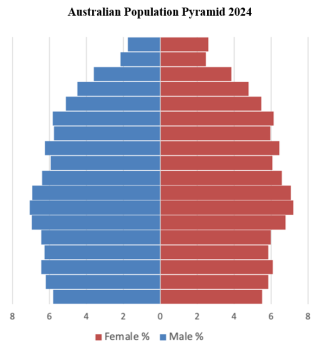
Of particular interest is the concurrent population growth in Australia during the period covered by these surveys. In 1987, the Australian population was 16,183,168, and by the most recent census, it had grown to 27,486,184, according to the Australian Bureau of Statistics. This demographic shift mirrors the broader global trend, as the world population increased from 5 billion to 7.9 billion over the same period. However, despite the overall population growth, Australia's census data suggests a relatively stable birth rate, with the average age of the population now at 39 years. This indicates that, while Australia is experiencing a growth in total numbers, the country is also facing the challenges associated with an aging population. Consequently, Australia today represents a unique blend of youth and aging, which has implications for public health, including the ongoing need for dental care services that cater to both younger and older generations. Figures 4, 5.
Figure 4. Data source: Australian Research Centre for Population Oral Health, The University of Adelaide, South Australia.
Figure 5. Data source: Australian Bureau of Statistics 36.

4. Will Conventional Complete Dentures Remain Necessary
The findings of this review suggest that edentulism is unlikely to disappear entirely, given its complex and multifactorial origins. While significant advancements have been made in dental care, preventive strategies, and treatment options, the persistence of socioeconomic and demographic factors ensures that edentulism will remain a concern in certain populations. These factors, which include income disparities, access to care, and cultural influences, continue to influence oral health outcomes. As a result, conventional complete dentures will likely maintain their role in restorative dentistry, serving as an essential solution for those who experience tooth loss. In the face of ongoing challenges, a comprehensive approach that combines preventive care with accessible restorative options will be critical in managing edentulism across diverse populations.
Dentistry is a dynamic field, continuously evolving as new technologies and treatment options emerge. As a result, the approach to treating edentulism has evolved significantly over time. While newer alternatives, such as implant-supported dentures and fixed prosthetics, are gaining popularity due to their durability and aesthetic appeal, conventional complete dentures continue to hold a critical role in restorative dentistry. This is largely because they remain more affordable and accessible for many patients, particularly those from lower socioeconomic backgrounds. For these individuals, cost considerations are a significant factor in decision-making, making traditional dentures the most practical and viable solution. Despite advances in dental technology, the enduring affordability and simplicity of conventional dentures ensure their continued relevance in clinical practice, especially in populations where financial constraints limit access to more complex treatments.
However, future technological advances may further reduce the prevalence of conventional dentures. Emerging treatments, driven by innovations in dental technology and materials, could offer more cost-effective and accessible alternatives, potentially shifting the role of traditional dentures over time. These advances might provide patients with more efficient, long-lasting solutions that are easier to maintain. Additionally, the prevalence of edentulism and the choice of treatment vary significantly across different countries, reflecting disparities in public health infrastructure, socioeconomic conditions, and access to advanced dental care. This variation highlights the complexity of predicting a universal trend for the future of complete dentures. It underscores the need for tailored approaches in different regions to address the unique challenges and opportunities within each healthcare system.
The continued relevance of conventional dentures will likely depend on the epidemiological stage of each country. In nations that are still in the early stages of the epidemiologic transition, where higher rates of tooth loss remain prevalent, traditional dentures may continue to be a crucial solution for edentulism. These countries may face challenges in terms of access to advanced dental care and preventive strategies, making conventional dentures the most viable and cost-effective option. Conversely, in countries with well-established preventive and dental health programs, the prevalence of edentulism may continue to decline, potentially diminishing the demand for traditional dentures. However, the future of complete dentures will ultimately be shaped by a complex interplay of socioeconomic, technological, and demographic factors that vary across regions. As healthcare systems advance, the balance between innovative treatment options and the accessibility of traditional solutions will determine the role of dentures in restorative dentistry.
In conclusion, while the role of conventional dentures may evolve as dental technologies and preventive care improve, they will likely remain an essential option for many individuals worldwide, particularly in regions where socioeconomic challenges and limited access to advanced care persist. The future of complete dentures will be influenced not only by technological advancements but also by the ongoing need to address health disparities across populations. By understanding the dynamic relationship between epidemiological trends, public health initiatives, and dental care access, we can better navigate the challenges of edentulism and ensure that effective, accessible solutions continue to be available to those in need. The continued integration of innovative treatments with traditional approaches may provide a more holistic, inclusive strategy for managing tooth loss in diverse communities.
Edentulism remains a critical public health concern, significantly impacting individuals’ quality of life and oral health outcomes. Understanding its epidemiology is essential for identifying at-risk populations, tailoring preventive strategies, and improving access to prosthetic rehabilitation. By addressing the systemic and sociodemographic factors contributing to edentulism, dental professionals and policymakers can implement targeted interventions to reduce its prevalence and associated burdens. This review highlights key epidemiological insights, aiding clinicians in promoting patient education and fostering evidence-based practices that mitigate the negative effects of tooth loss on overall health and well-being.
Abbreviations

GPT-9

The Glossary of Prosthodontic Terms

ENSAB

Colombian National Oral Health Survey

Ethics Approval and Consent to Participate
This article is a review of existing literature and does not involve human subjects or the collection of new data. As such, it does not require ethical approval in accordance with the Declaration of Helsinki (1964) and its later amendments. All studies referenced in this review have been conducted in compliance with ethical standards, as reported by the original authors.
Author Contributions
Andres Felipe Aguirre-Osorio is the sole author. The author read and approved the final manuscript.
Data Availability Statement
This study is a review and does not involve the collection or analysis of new data. All information and findings presented are derived from previously published studies, which are cited within the article. Readers are encouraged to refer to the original sources for detailed data.
Funding
This review was self-funded, The author of this manuscript received no specific grant from any funding agency in the public, commercial, or not-for-profit sectors.
Conflicts of Interest
The author declares no conflicts of interest.
References
[1] Irish, J. D., & Guatelli-Steinberg, D. (2003). Ancient teeth and modern human origins: An expanded comparison of African Plio-Pleistocene and recent world dental samples. *Journal of Human Evolution, 45*(2), 113–144.
[2] P. U. (2020). The trouble with teeth. *Scientific American*, 44–49.
[3] Casanova-Rosado, A. J., Casanova-Rosado, J. F., Minaya-Sanchez, M., Robles-Minaya, J. L., Casanova-Sarmiento, J. A., Marquez-Corona, M. D., et al. (2021). Association of edentulism with various chronic diseases in Mexican elders 60+ years: Results of a population-based survey. *Healthcare (Basel)*, *9*(4).
[4] Crocombe, L. A., & Slade, G. D. (2007). Decline of the edentulism epidemic in Australia. *Australian Dental Journal, 52*(2), 154–156.
[5] Russell, S. L., Gordon, S., Lukacs, J. R., & Kaste, L. M. (2013). Sex/gender differences in tooth loss and edentulism: Historical perspectives, biological factors, and sociologic reasons. *Dental Clinics of North America, 57*(2), 317–337.
[6] FA HAK. (2014). History of dentistry. *Archives of Medicine and Health Sciences, 2*(1), 106–110.
[7] Arnold, F. A. Jr. (1957). Grand Rapids fluoridation study; results pertaining to the eleventh year of fluoridation. *American Journal of Public Health and the Nation’s Health, 47*(5), 539–545.
[8] Dyson, J. E., & Darvell, B. W. (1993). Aspects of the design of modern dental air turbine handpieces. *Australian Dental Journal, 38*(6), 456–470.
[9] The Glossary of Prosthodontic Terms: Ninth Edition. (2017). *Journal of Prosthetic Dentistry, 117*(5S), e1–e105.
[10] McGarry, T. J., Nimmo, A., Skiba, J. F., Ahlstrom, R. H., Smith, C. R., & Koumjian, J. H. (1999). Classification system for complete edentulism. The American College of Prosthodontics. *Journal of Prosthodontics, 8*(1), 27–39.
[11] Peres, M., Ferreira, J. L., & Watt, R. G. (2021). The contribution of epidemiology to oral health research. In *Oral Epidemiology* (pp. 3–22).
[12] JP. M. (1994). The epidemiologic transition theory. *Journal of Epidemiology and Community Health, 48*(4), 329.
[13] Rothman, K. J., Greenland, S., & Lash, T. L. (2008). *Modern epidemiology*. Wolters Kluwer Health/Lippincott Williams & Wilkins.
[14] Gordis, L. (2013). *Epidemiology*. Elsevier Health Sciences.
[15] Turner, B. L., & Klaus, H. (2020). The Lambayeque Biohistoric Project: Context and analysis. Springer Nature Switzerland.
[16] Wallis, P., Colson, J., & Chilosi, D. (2018). Structural change and economic growth in the British economy before the Industrial Revolution, 1500–1800. *Journal of Economic History, 78*(3), 862–903.
[17] Douglass, C. W., Shih, A., & Ostry, L. (2002). Will there be a need for complete dentures in the United States in 2020? *Journal of Prosthetic Dentistry, 87*(1), 5–8.
[18] Carlsson, G. E., & Omar, R. (2010). The future of complete dentures in oral rehabilitation: A critical review. *Journal of Oral Rehabilitation, 37*, 143–156.
[19] Sussex, P. V. (2008). Edentulism from a New Zealand perspective: A review of the literature. *New Zealand Dental Journal, 104*(3), 84–96.
[20] Mordini, L., Lee, P., Lazaro, R., Biagi, R., & Giannetti, L. (2021). Sport and dental traumatology: Surgical solutions and prevention. *Dental Journal (Basel), 9*(3).
[21] Patel, J., Wallace, J., Doshi, M., Gadanya, M., Ben Yahya, I., Roseman, J., et al. (2021). Oral health for healthy ageing. *The Lancet Healthy Longevity, 2*(8), E521–E527.
[22] Wu, B., Liang, J., Plassman, B. L., Remle, C., & Luo, X. (2012). Edentulism trends among middle-aged and older adults in the United States: Comparison of five racial/ethnic groups. *Community Dentistry and Oral Epidemiology, 40*(2), 145–153.
[23] McMillan, A. S., & Wong, M. C. (2004). Emotional effects of tooth loss in community-dwelling elderly people in Hong Kong. *International Journal of Prosthodontics, 17*(2).
[24] Brignardello-Petersen, R. (2020). Association between sex or race and edentulism varies importantly across settings. *Journal of the American Dental Association, 151*(1), E3–E.
[25] Suominen-Taipale, A. L., Alanen, P., Helenius, H., Nordblad, A., & Uutela, A. (1999). Edentulism among Finnish adults of working age, 1978–1997. *Community Dentistry and Oral Epidemiology, 27*(5), 353–365.
[26] United Nations, Department of Economic and Social Affairs, Population Division. (2019). *World population prospects 2019: Highlights* (ST/ESA/SER.A/423).
[27] Ministerio de Salud de Colombia. (2014). IV Estudio Nacional de Salud Oral. *República de Colombia*.
[28] Islas-Granillo, H., Borges-Yanez, S. A., Lucas-Rincon, S. E., Medina-Solis, C. E., Casanova-Rosado, A. J., & Marquez-Corona, M. L. (2011). Edentulism risk indicators among Mexican elders 60 years and older. *Archives of Gerontology and Geriatrics, 53*(3), 258–262.
[29] Sussex, P. V., Thomson, W. M., & Fitzgerald, R. P. (2010). Understanding the "epidemic" of complete tooth loss among older New Zealanders. *Gerodontology, 27*(2), 85–95.
[30] Kailembo, A., Preet, R., & Williams, J. S. (2016). Common risk factors and edentulism in adults aged 50 years and over in China, Ghana, India, and South Africa: Results from the WHO Study on Global AGEing and Adult Health (SAGE). *BMC Oral Health, 17*.
[31] Olofsson, H., Ulander, E. L., Gustafson, Y., & Hornsten, C. (2018). Association between socioeconomic and health factors and edentulism in people aged 65 and older: A population-based survey. Scandinavian Journal of Public Health, 46(7), 690–698.
[32] F. S. (1939). The teeth of the Australian Aborigines. SAGE Journals, 29–49.
[33] Al-Rafee, M. A. (2020). The epidemiology of edentulism and the associated factors: A literature review. Journal of Family Medicine and Primary Care, 9(4), 1841–1843.
[34] Slade, G. D., Spencer, A. J., & Roberts-Thomson, K. F. (2007). Australia’s dental generations: The national survey of adult oral health. Dental Statistics and Research Series, 2004(34), 81–83. Australian Institute of Health and Welfare.
[35] Australian Research Centre for Population Oral Health. (n.d.). Dental statistics and research series. The University of Adelaide. Available at:
[36] Australian Bureau of Statistics. (n.d.). Population clock and pyramid. Available at:
[37] Musacchio, E., Perissinotto, E., Binotto, P., Sartori, L., Silva-Netto, F., & Zambon, S. (2007). Tooth loss in the elderly and its association with nutritional status, socio-economic and lifestyle factors. Acta Odontologica Scandinavica, 65(2), 78–86.
[38] Jacob, L., Shin, J. I., Oh, H., Lopez-Sanchez, G. F., Smith, L., Haro, J. M., et al. (2021). Association between diabetes and edentulism and their joint effects on health status in 40 low and middle-income countries. BMJ Open Diabetes Research & Care, 9(1), e000965.
[39] Thorstensson, H., & Johansson, B. (2010). Why do some people lose teeth across their lifespan whereas others retain a functional dentition into very old age? Gerodontology, 27(1), 19–25.
[40] Al-Zahrani, M. S., Alhassani, A. A., Melis, M., & Zawawi, K. H. (2021). Depression is related to edentulism and lack of functional dentition: An analysis of NHANES data, 2005–2016. Journal of Public Health Dentistry, 81(3), 206–213.
[41] Oliveira, E. J. P., Alves, L. C., Santos, J. L. F., Duarte, Y. A. D., & de Andrade, F. B. (2020). Edentulism and all-cause mortality among Brazilian older adults: 11-year follow-up. Brazilian Oral Research, 34, e056.
[42] Oliveira, E. J. P., Alves, L. C., Duarte, Y. A. D., & de Andrade, F. B. (2021). Edentulism-free life expectancy among older Brazilian adults: SABE study, 2006–2016. Gerodontology, 38(4), 429–436.
[43] Felton, D. A. (2016). Complete edentulism and comorbid diseases: An update. Journal of Prosthodontics, 25(1), 5–20.
Cite This Article
  • APA Style

    Aguirre-Osorio, A. F. (2025). The Future of Conventional Complete Dentures: A Narrative Review on Edentulism Risk Factors. International Journal of Dental Medicine, 11(1), 25-33. https://doi.org/10.11648/j.ijdm.20251101.14

    Copy | Download

    ACS Style

    Aguirre-Osorio, A. F. The Future of Conventional Complete Dentures: A Narrative Review on Edentulism Risk Factors. Int. J. Dent. Med. 2025, 11(1), 25-33. doi: 10.11648/j.ijdm.20251101.14

    Copy | Download

    AMA Style

    Aguirre-Osorio AF. The Future of Conventional Complete Dentures: A Narrative Review on Edentulism Risk Factors. Int J Dent Med. 2025;11(1):25-33. doi: 10.11648/j.ijdm.20251101.14

    Copy | Download

  • @article{10.11648/j.ijdm.20251101.14,
      author = {Andres Felipe Aguirre-Osorio},
      title = {The Future of Conventional Complete Dentures: A Narrative Review on Edentulism Risk Factors
    },
      journal = {International Journal of Dental Medicine},
      volume = {11},
      number = {1},
      pages = {25-33},
      doi = {10.11648/j.ijdm.20251101.14},
      url = {https://doi.org/10.11648/j.ijdm.20251101.14},
      eprint = {https://article.sciencepublishinggroup.com/pdf/10.11648.j.ijdm.20251101.14},
      abstract = {Objective: This narrative review examines the factors contributing to edentulism, presents relevant data, and explores whether conventional complete dentures will remain necessary in the future. Background: Although tooth loss has shifted from being an inevitable outcome due to limited treatment options to a largely preventable condition, a significant number of individuals remain edentulous. This persistence is influenced by factors such as limited access to oral healthcare, socio-economic status, epidemiological transitions, and the attitudes of both populations and healthcare providers. Despite advances, edentulism, often caused by dental caries, periodontal disease, or trauma, continues to affect a large portion of the global population and is unlikely to diminish in the near future. The literature identifies several factors that contribute to the onset of edentulism. Methods: A thorough literature search was conducted across electronic databases including PubMed, Google Scholar, Scopus, and the University of Sydney Library’s scientific articles database. Results: Initially, 378 articles were identified. After screening abstracts and assessing relevance, 83 articles were shortlisted. Of these, 24 met the inclusion criteria, focusing on risk factors associated with edentulism and were selected for review. Conclusion: The need for conventional dentures will likely depend on the stage of epidemiological transition in each country. Traditional dentures may remain a key solution for edentulism in nations with higher rates of tooth loss.
    },
     year = {2025}
    }
    

    Copy | Download

  • TY  - JOUR
    T1  - The Future of Conventional Complete Dentures: A Narrative Review on Edentulism Risk Factors
    
    AU  - Andres Felipe Aguirre-Osorio
    Y1  - 2025/04/29
    PY  - 2025
    N1  - https://doi.org/10.11648/j.ijdm.20251101.14
    DO  - 10.11648/j.ijdm.20251101.14
    T2  - International Journal of Dental Medicine
    JF  - International Journal of Dental Medicine
    JO  - International Journal of Dental Medicine
    SP  - 25
    EP  - 33
    PB  - Science Publishing Group
    SN  - 2472-1387
    UR  - https://doi.org/10.11648/j.ijdm.20251101.14
    AB  - Objective: This narrative review examines the factors contributing to edentulism, presents relevant data, and explores whether conventional complete dentures will remain necessary in the future. Background: Although tooth loss has shifted from being an inevitable outcome due to limited treatment options to a largely preventable condition, a significant number of individuals remain edentulous. This persistence is influenced by factors such as limited access to oral healthcare, socio-economic status, epidemiological transitions, and the attitudes of both populations and healthcare providers. Despite advances, edentulism, often caused by dental caries, periodontal disease, or trauma, continues to affect a large portion of the global population and is unlikely to diminish in the near future. The literature identifies several factors that contribute to the onset of edentulism. Methods: A thorough literature search was conducted across electronic databases including PubMed, Google Scholar, Scopus, and the University of Sydney Library’s scientific articles database. Results: Initially, 378 articles were identified. After screening abstracts and assessing relevance, 83 articles were shortlisted. Of these, 24 met the inclusion criteria, focusing on risk factors associated with edentulism and were selected for review. Conclusion: The need for conventional dentures will likely depend on the stage of epidemiological transition in each country. Traditional dentures may remain a key solution for edentulism in nations with higher rates of tooth loss.
    
    VL  - 11
    IS  - 1
    ER  - 

    Copy | Download

Author Information